
Adaptive Cleaning Systems Based on Environmental Variables
Environmental hygiene is influenced by one critical factor:
Traffic.
The frequency, density, and behavior of occupants directly affect contamination load, surface wear, and chemical exposure requirements.
At Veppa Services, we do not apply uniform cleaning routines across all spaces.
We adjust our protocols based on traffic-informed environmental analysis.
This ensures precision instead of over-application.
1. Understanding Traffic as an Environmental Variable
Facility traffic influences:
Microbial transfer rates
Surface recontamination speed
Wear on finishes and coatings
Airborne particulate redistribution
Moisture introduction in specific zones
Chemical residue accumulation patterns
High-traffic does not simply mean “clean more.”
It requires calibrated adjustment.
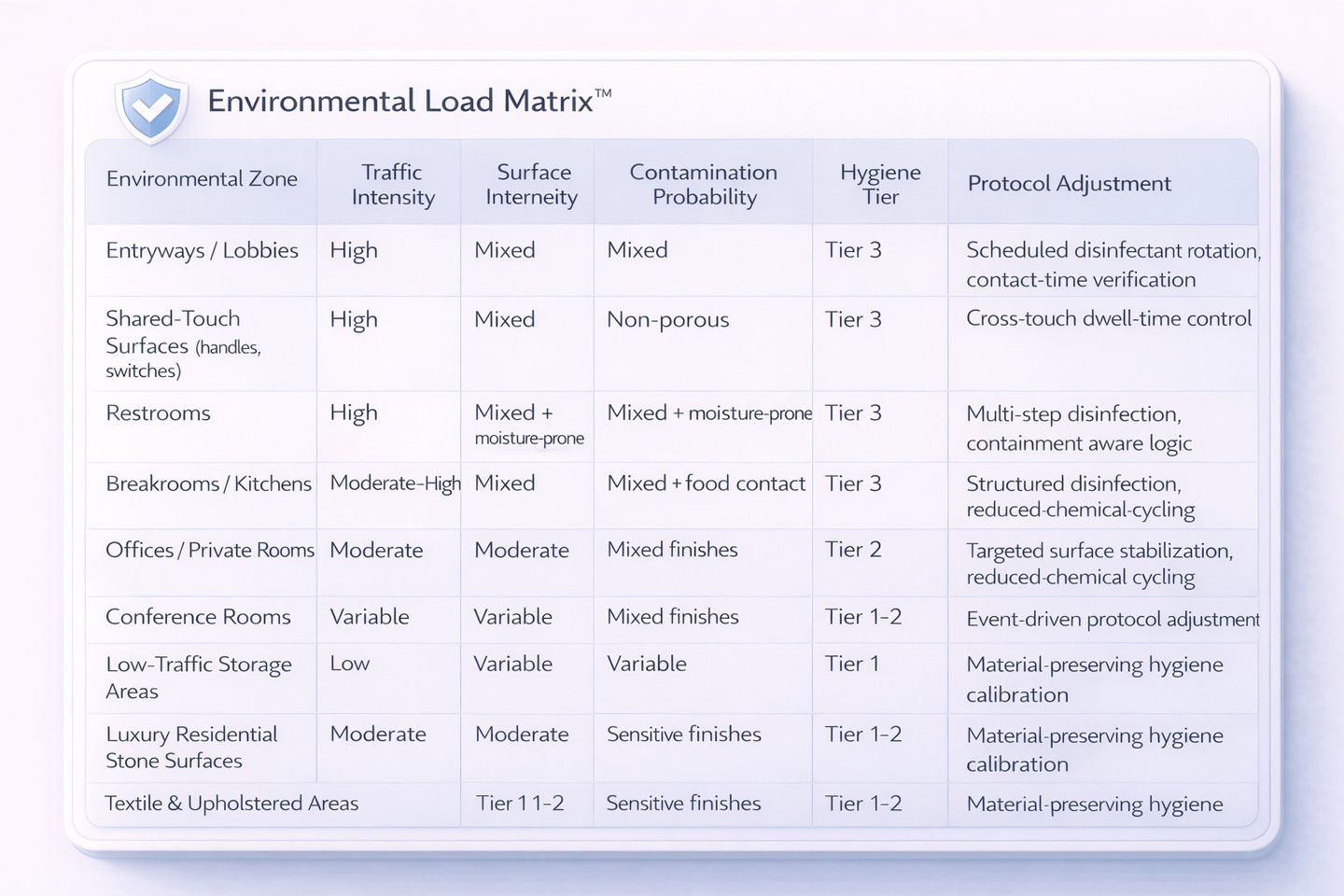
2. Environmental Load Mapping
Before establishing a cleaning frequency or chemical protocol, we evaluate:
Entry/exit density
Shared-touch frequency
Zone transitions (public → semi-private → controlled)
Equipment handling areas
Restroom usage cycles
Breakroom and food contact proximity
Textile exposure frequency
This process allows us to map environmental load intensity.
Not all square footage carries equal risk.
3. Variable Logic in Protocol Design
Once traffic intensity is categorized, we adjust:
Cleaning frequency
Disinfection necessity vs. routine sanitation
Chemical dilution levels
Tool allocation per zone
Surface preservation measures
Dwell time prioritization
Moisture control sequencing
This prevents two common industry problems:
Over-cleaning low-risk areas (accelerating material wear)
Under-addressing high-transfer surfaces
Variable logic ensures proportional response.
4. Commercial Applications
In commercial environments, traffic patterns fluctuate due to:
Seasonal variation
Staffing changes
Event-driven spikes
Operational expansion
Renovation phases
Our programs remain adaptable.
Environmental hygiene must evolve with occupancy patterns — not remain fixed in outdated routines.
5. Residential Applications
Large residences, multi-level homes, and shared living environments also present variable traffic logic:
Kitchen zones carry higher contact frequency
Guest areas fluctuate in exposure
Pet activity affects floor-level contamination
Entryways accumulate outdoor transfer
We calibrate care accordingly, preserving materials while managing exposure realistically.
6. Why Traffic-Based Logic Matters
Ignoring traffic variability can result in:
Premature material degradation
Chemical overexposure
Residue accumulation
Inefficient labor allocation
Increased liability risk
Inconsistent hygiene outcomes
Structured traffic-based environmental care increases:
Surface longevity
Operational efficiency
Cleaning precision
Environmental stability
7. Alignment with Risk-Based Environmental Hygiene
Traffic analysis forms part of our broader Environmental Risk Management Framework™.
It reflects principles seen in:
Risk-based management models
Public health exposure control logic
Structured contamination prevention systems
We do not clean by square footage alone.
We clean by environmental load.
Facility traffic & environmental load analysis
This technical paper express Veppa’s internal methodology and synthesis of publicly available guidance. They are not peer-reviewed publications.
Cleaning that ignores traffic is repetitive.
Cleaning that understands traffic is preventive.
At Veppa Services, facility variables inform every protocol.
Reach out for thoughtful, expert cleaning care
Technical paper- Material Compatibility & Surface Stability in Repeated Service Environments