
Surface damage from improper cleaning, chemicals, and mineral buildup can lead to costly fixture replacement.
Learn how material-aware maintenance prevents long-term expenses.
In both residential and commercial environments, surface care is often approached as a routine task. However, improper cleaning methods, chemical exposure, mineral buildup, and inconsistent maintenance can lead to progressive material damage.
Surface damage is often misunderstood as product failure or natural wear.
In reality, most visible deterioration—whether dulling, corrosion, etching, or coating loss—is the result of repeated maintenance decisions over time.
What appears sudden is usually progressive.
What seems unavoidable is often preventable.
What Causes Surface Damage Over Time
Surface degradation is rarely caused by a single factor. It typically results from a combination of environmental and maintenance-related conditions:
Repeated exposure to harsh or incompatible cleaning chemicals
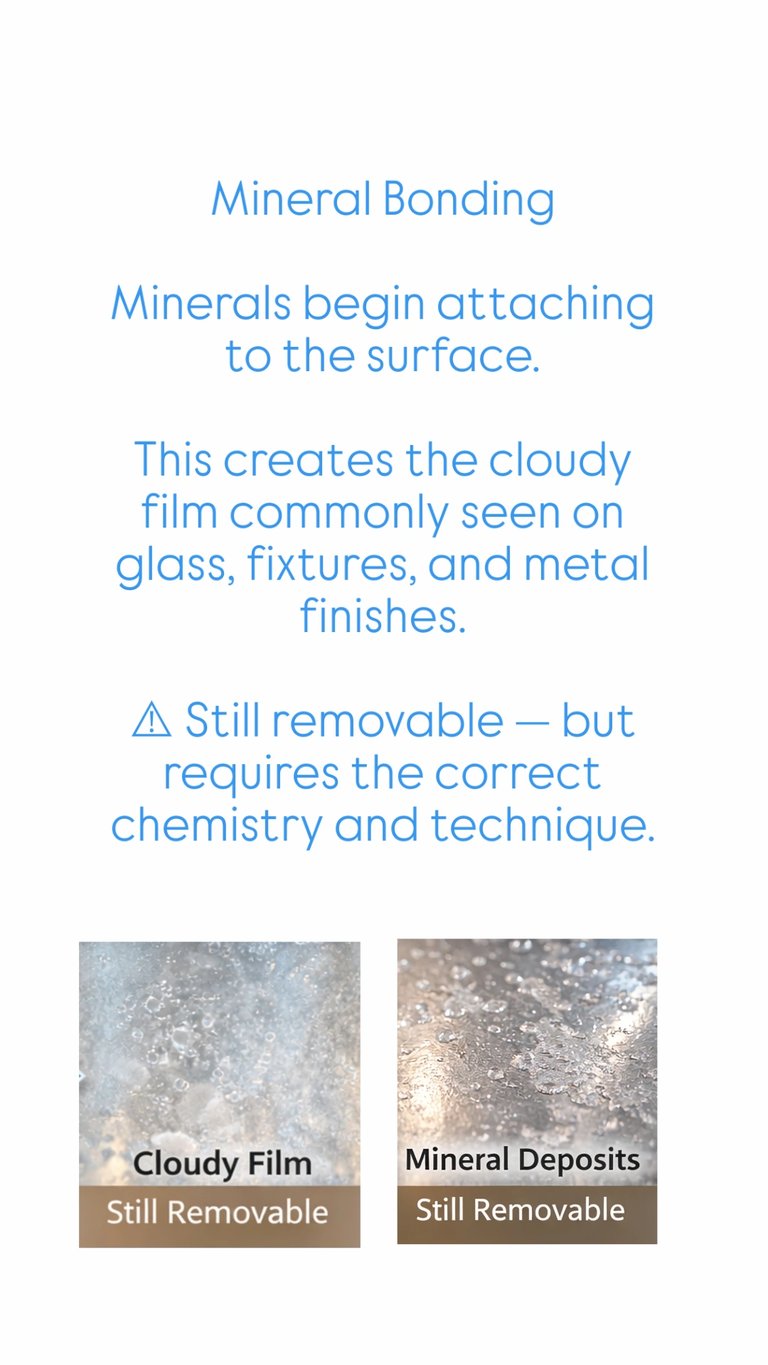
Mineral accumulation from hard water (calcium and magnesium deposits)
Moisture retention in seams and joints
Abrasive cleaning methods that weaken protective finishes
Lack of consistent, material-appropriate maintenance
Over time, these factors compromise protective coatings, exposing the underlying material to oxidation and corrosion.
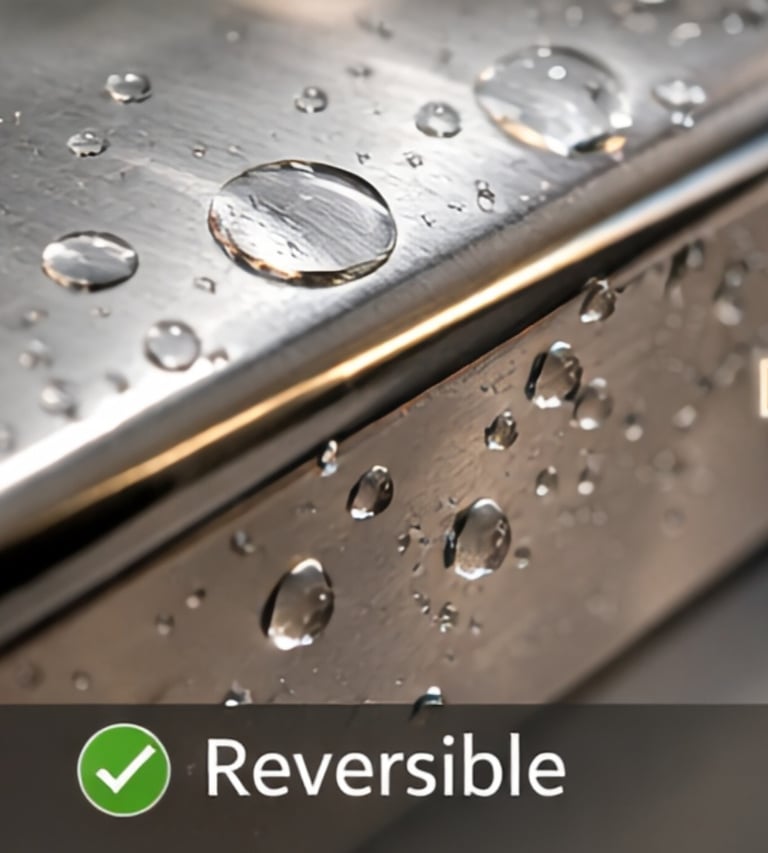
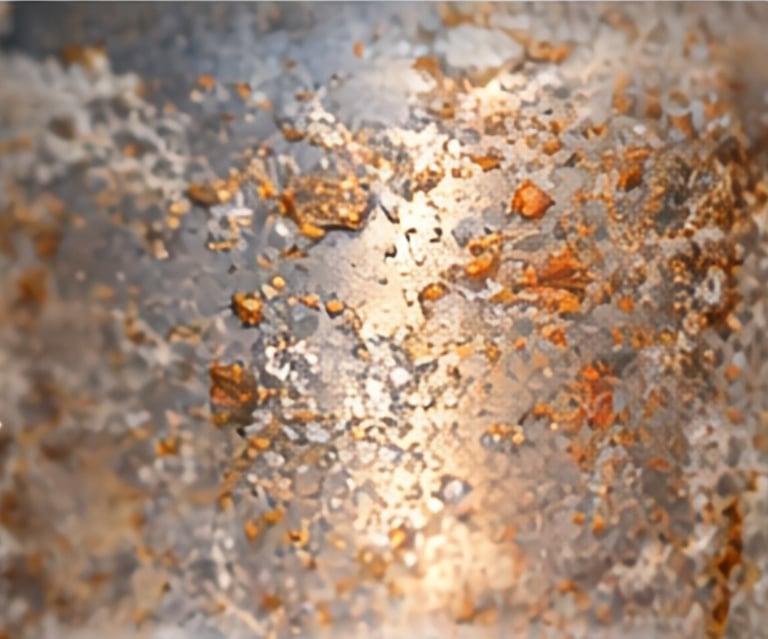
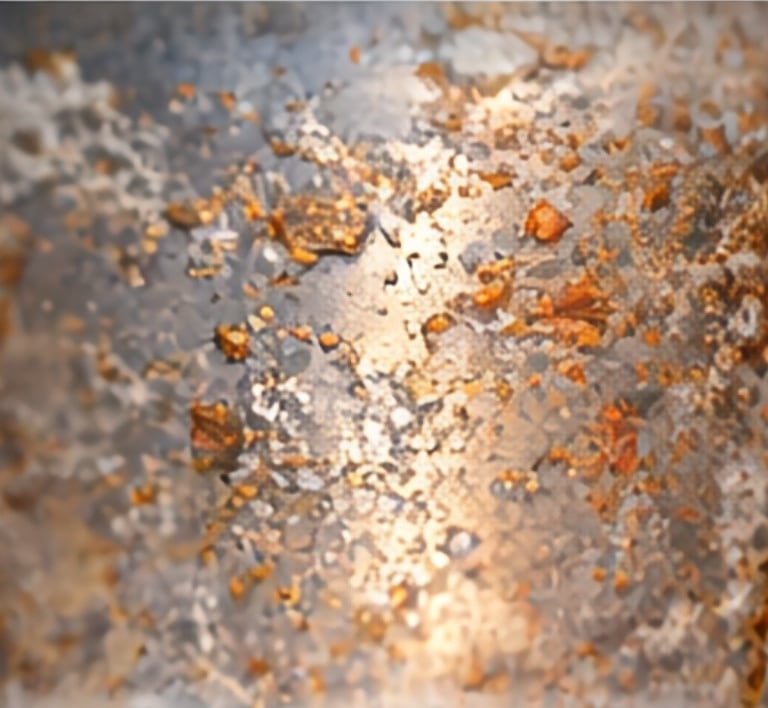
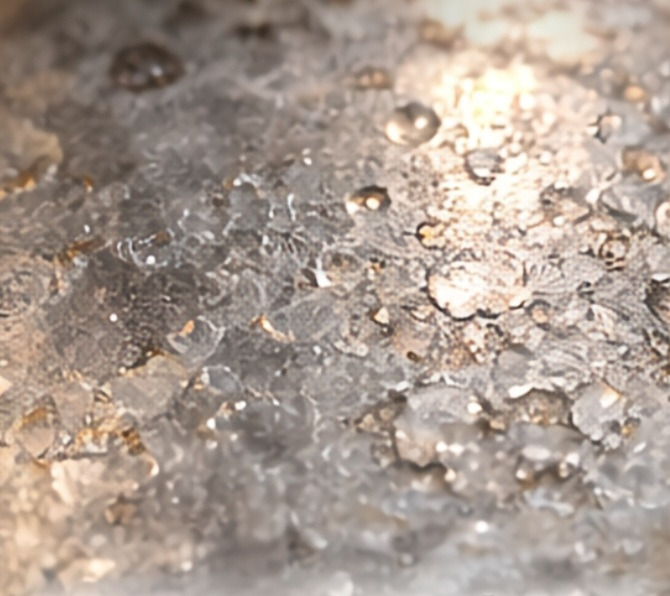
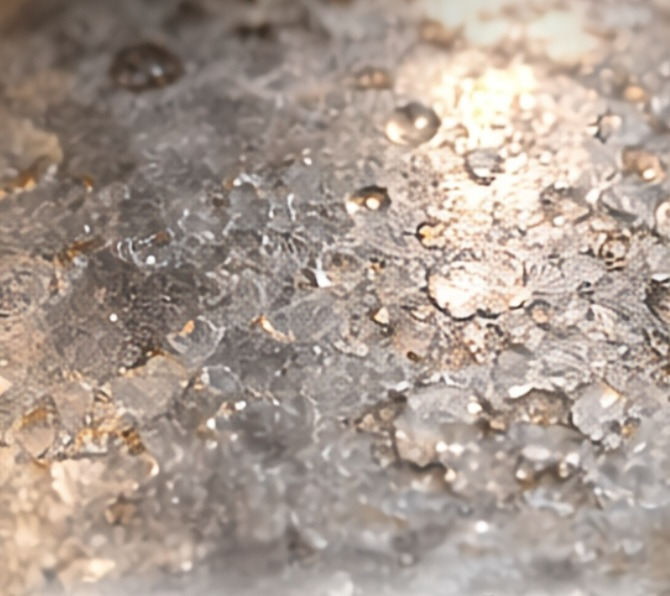
Surface failure: Once deterioration progresses cleaning alone cannot restore the material
Visible Damage Caused by Improper Maintenance
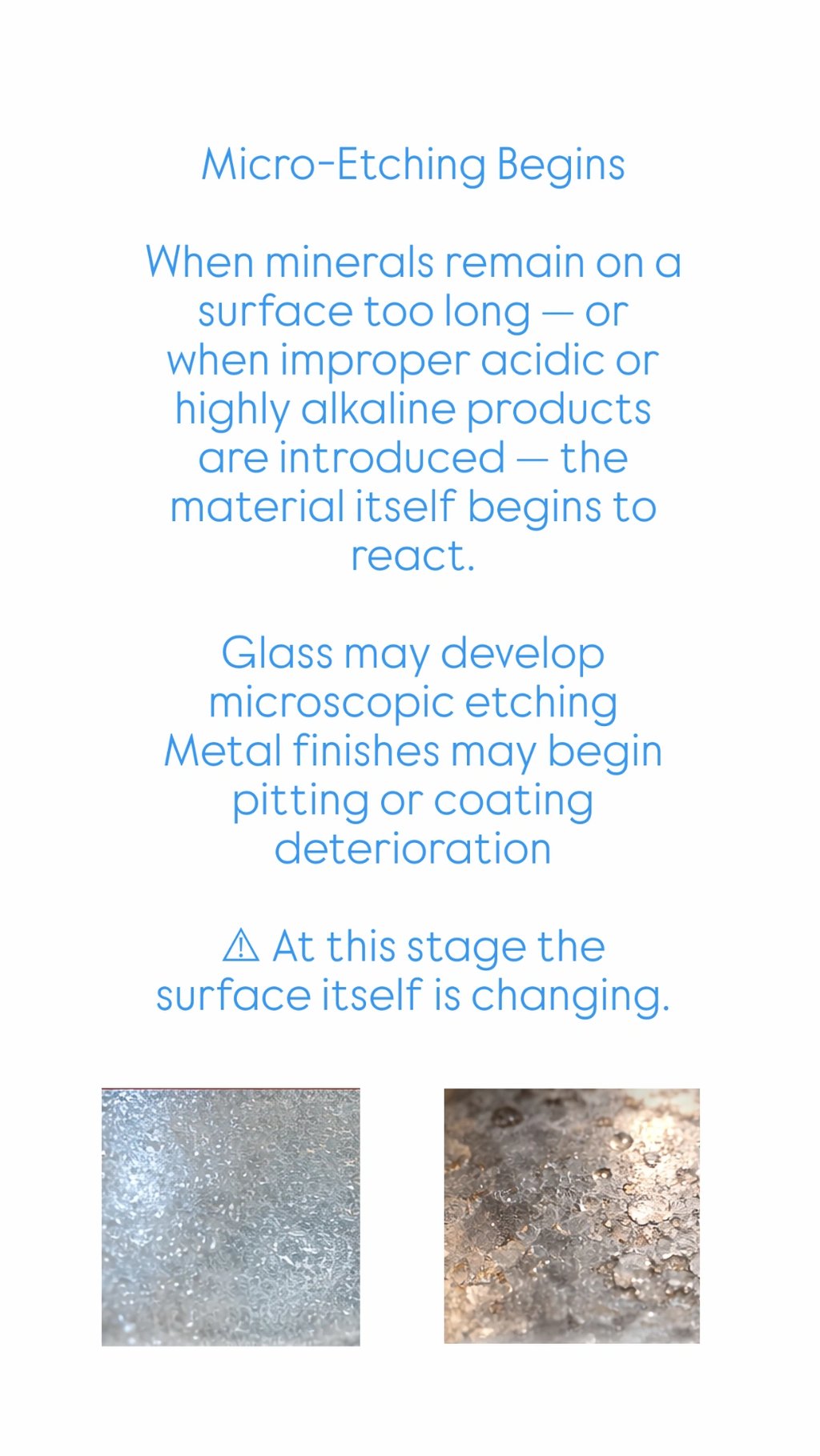
Metal finishes may begin
pitting or coating deterioration.
At this stage the surface itself is changing.
Surface condition is built over time—not in a single visit.



From Surface Wear to Fixture Failure
Once a surface’s protective layer is compromised, deterioration accelerates.
Common progression includes:
Loss of finish (dulling, discoloration)
Mineral entrapment within the surface
Pitting corrosion (small cavities in metal surfaces)
Structural weakening at joints and seams
At this stage, traditional cleaning methods are no longer corrective.
The material itself has changed.
In many cases, the only viable solution becomes fixture replacement.
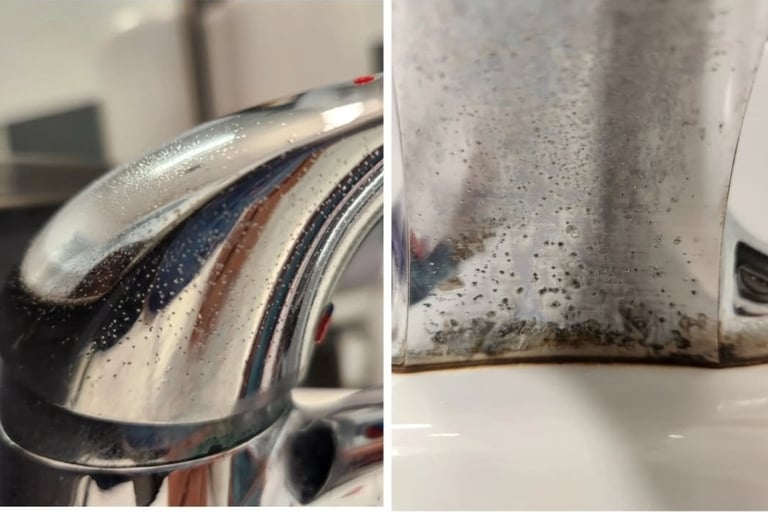
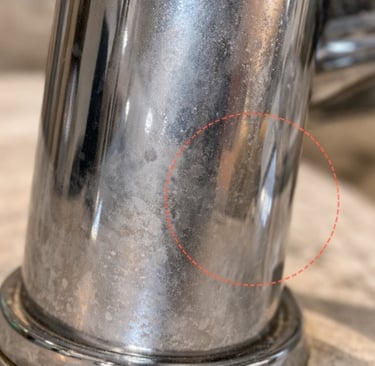
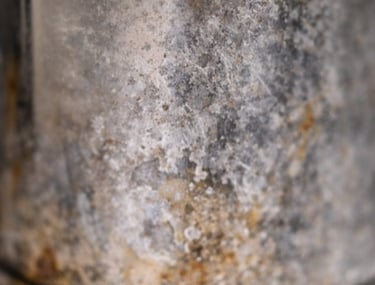
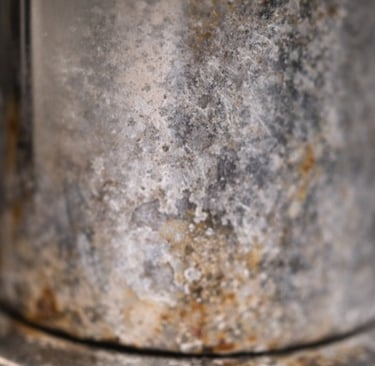
Common Surface Damage Caused by Improper Maintenance
Often misinterpreted as normal wear
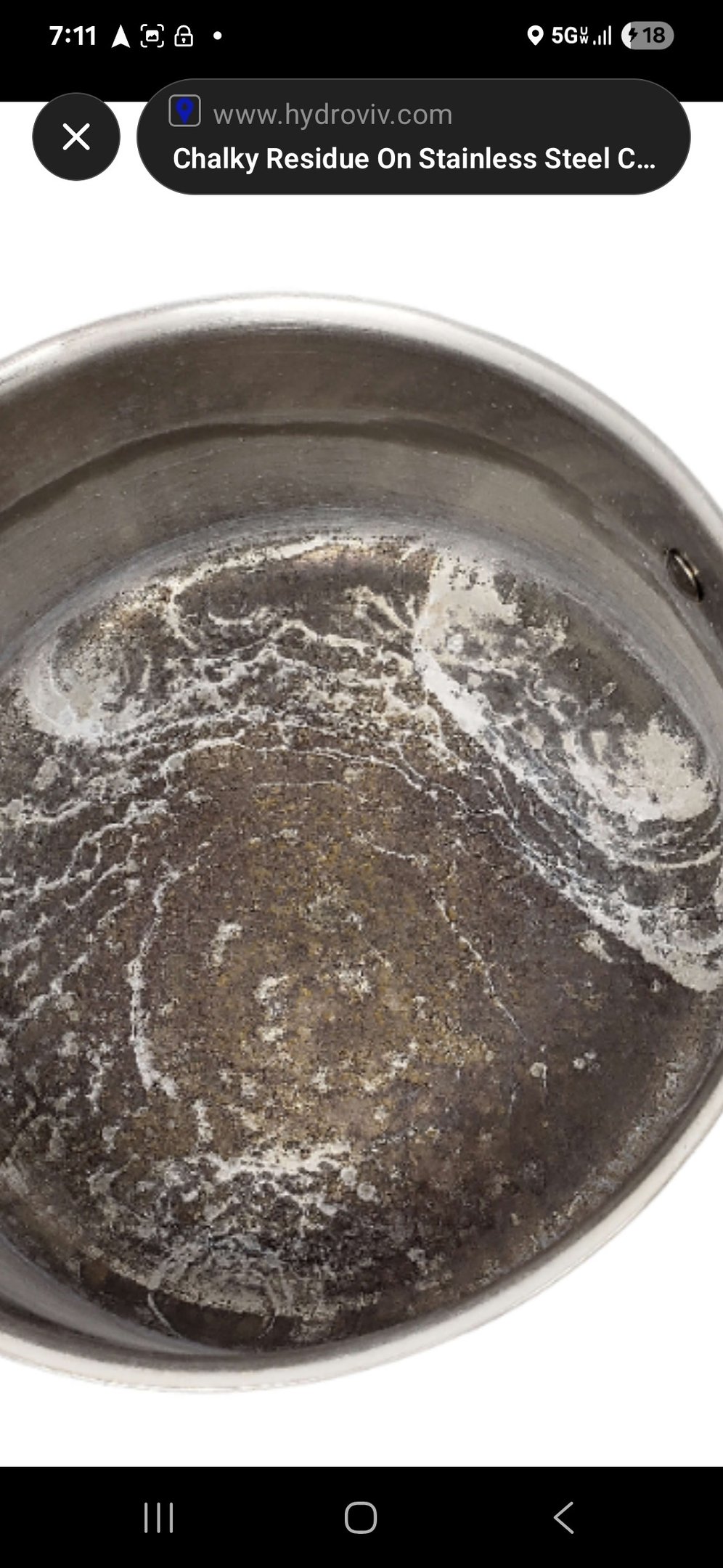
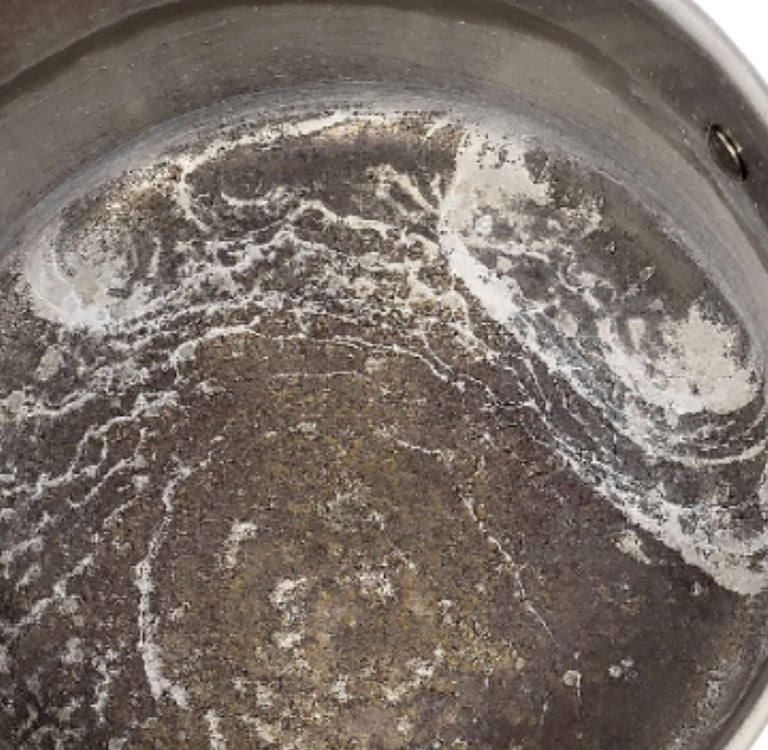
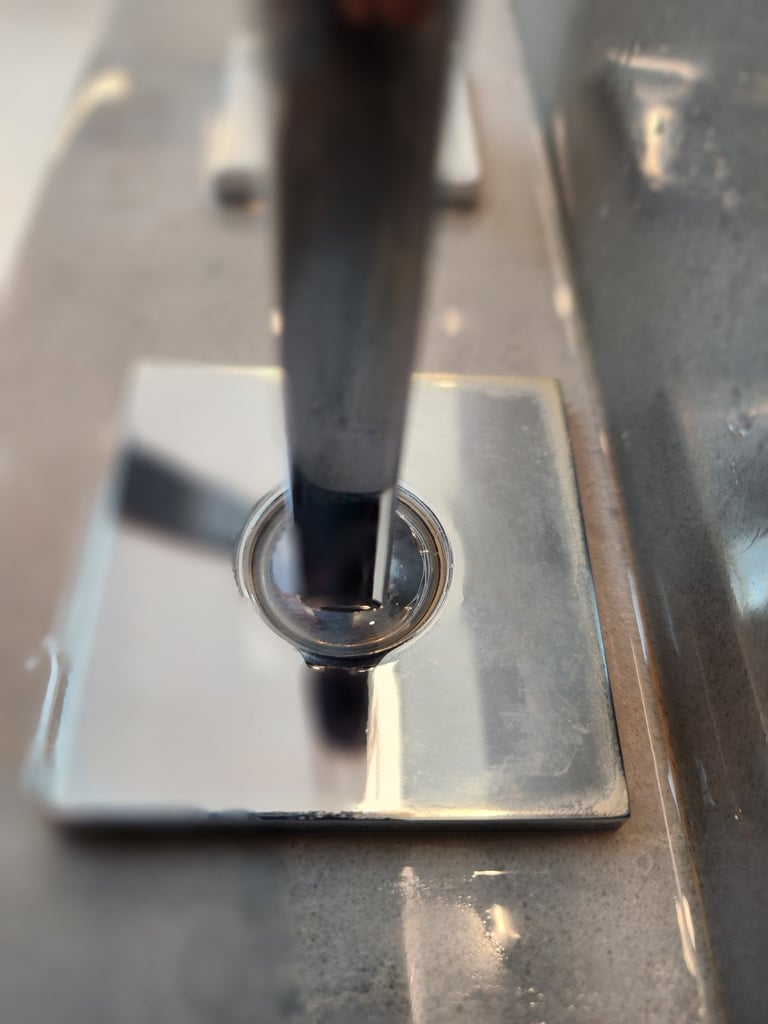
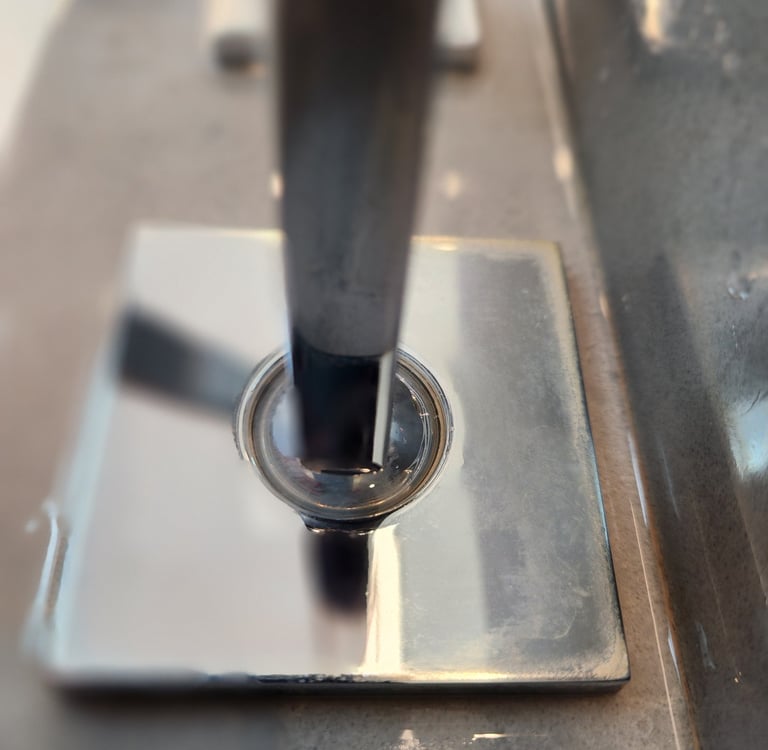
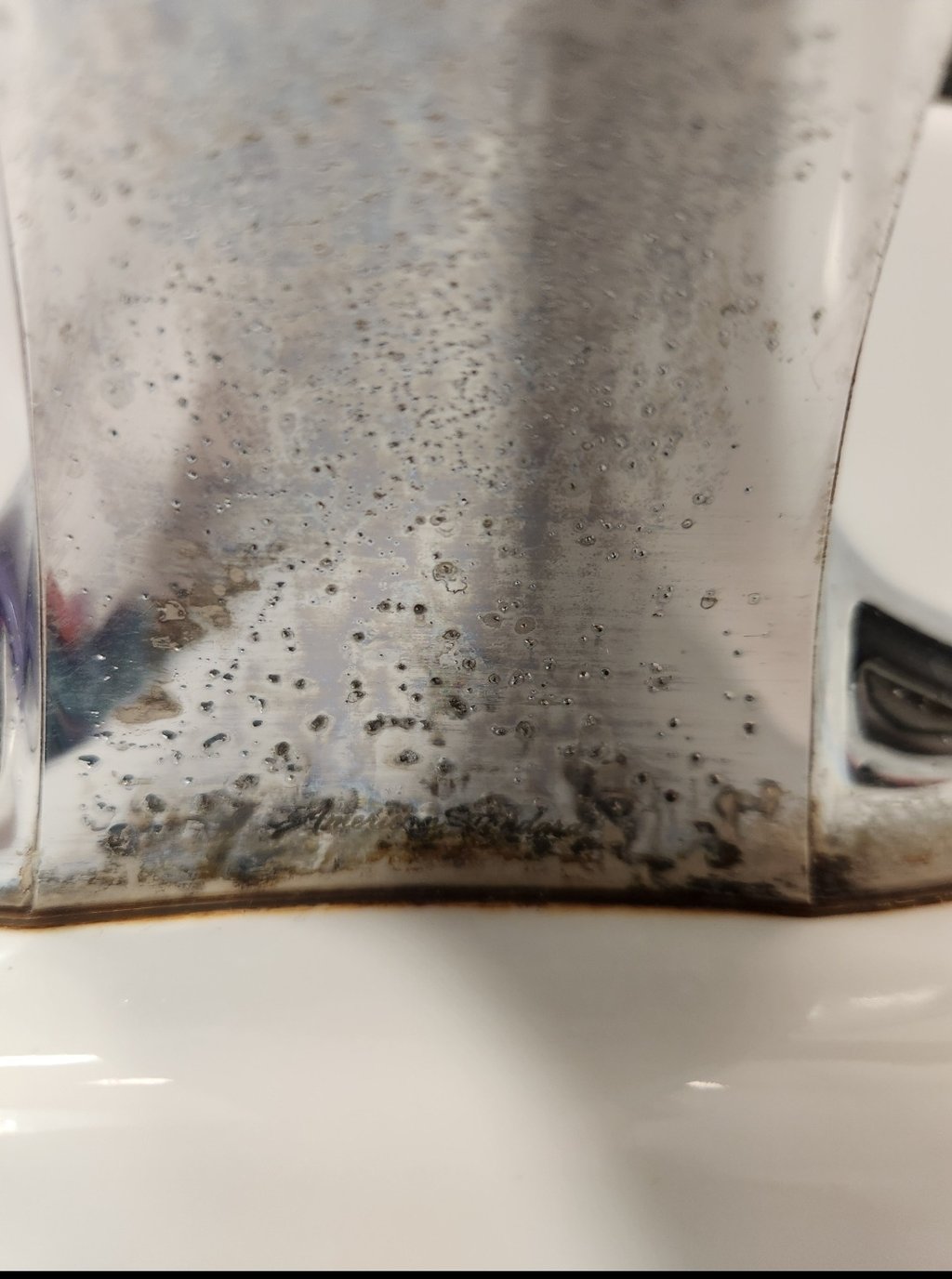
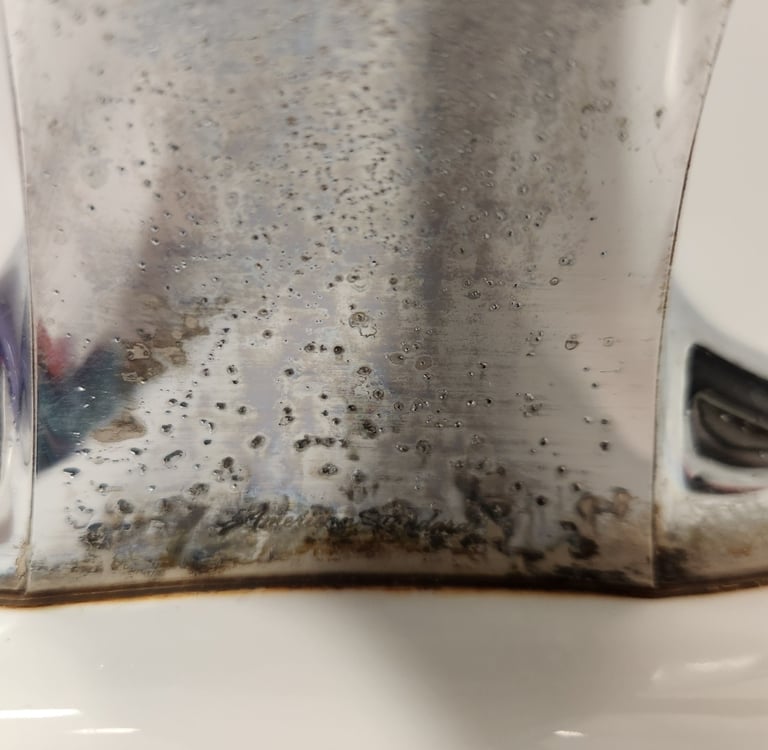
Protective coating breakdown from incompatible chemicals
Fixture corrosion due to moisture retention and improper drying
Retained moisture and mineral deposits
Improper maintenance does not always mean neglect. In many cases, it involves well-intentioned but incompatible practices, such as:
Using acidic or alkaline products on sensitive surfaces
Applying excessive moisture to materials that require controlled drying
Using abrasive tools that gradually remove protective finishes
Repeating generalized cleaning methods across different material types
Over time, these small mismatches create cumulative damage.
Prevention Through Material-Aware Maintenance
Not all surfaces require the same approach.
Material-aware care focuses on:
Identifying surface condition before treatment
Using methods compatible with each material
Controlling mineral buildup before it becomes embedded
Preserving protective finishes rather than stripping them
Maintaining consistency through structured care programs
This approach shifts maintenance from reactive to preventive.
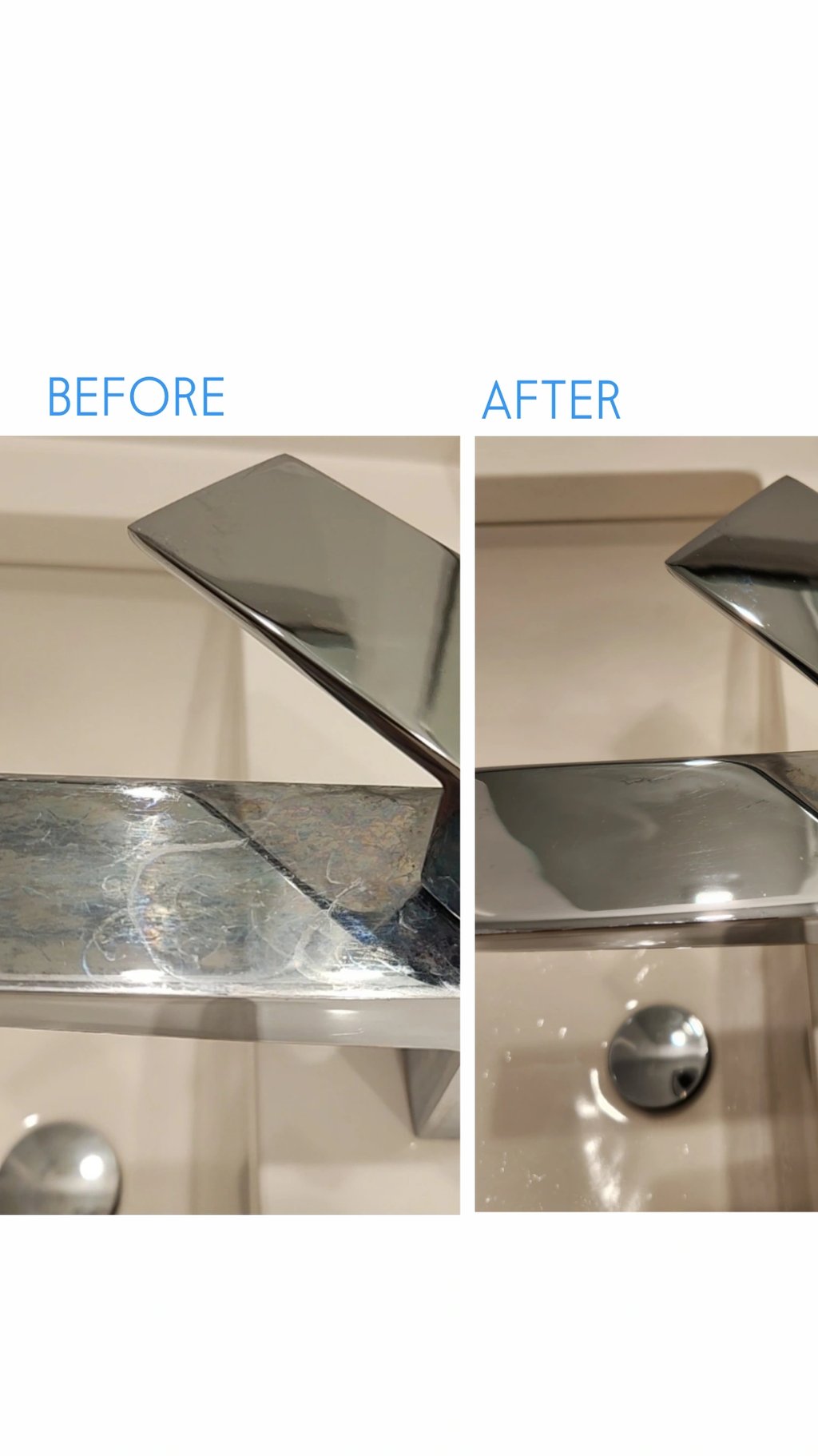
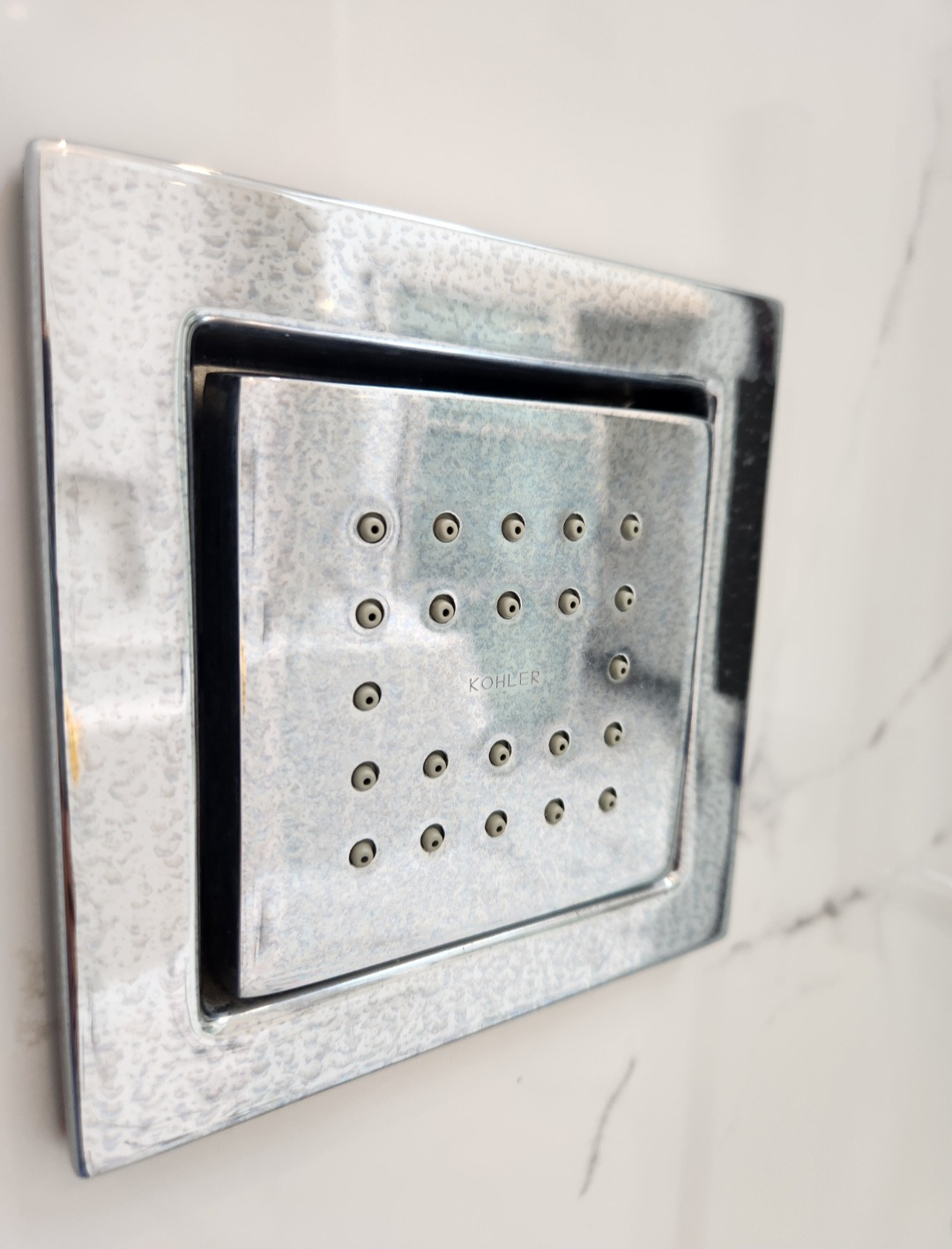
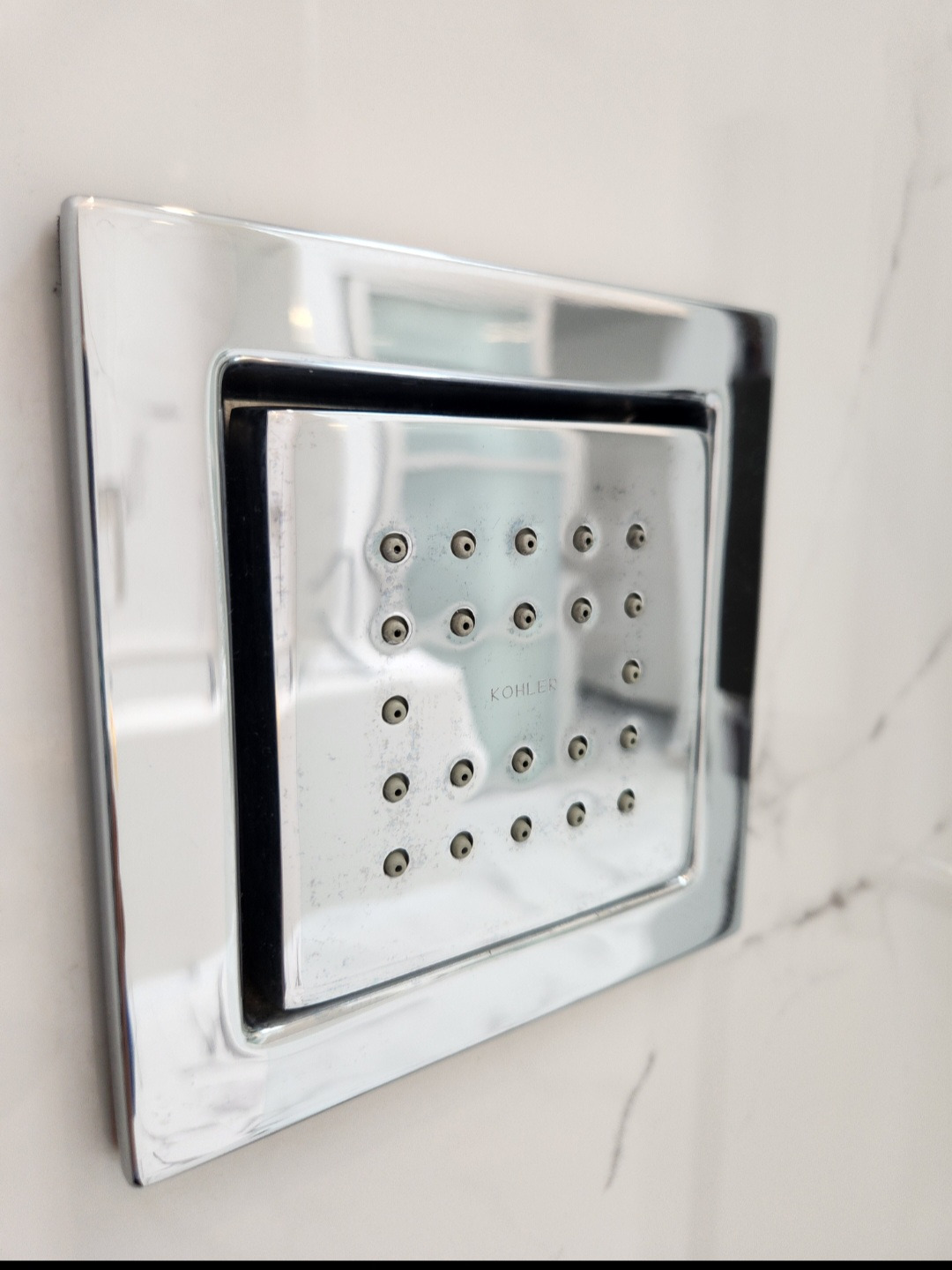
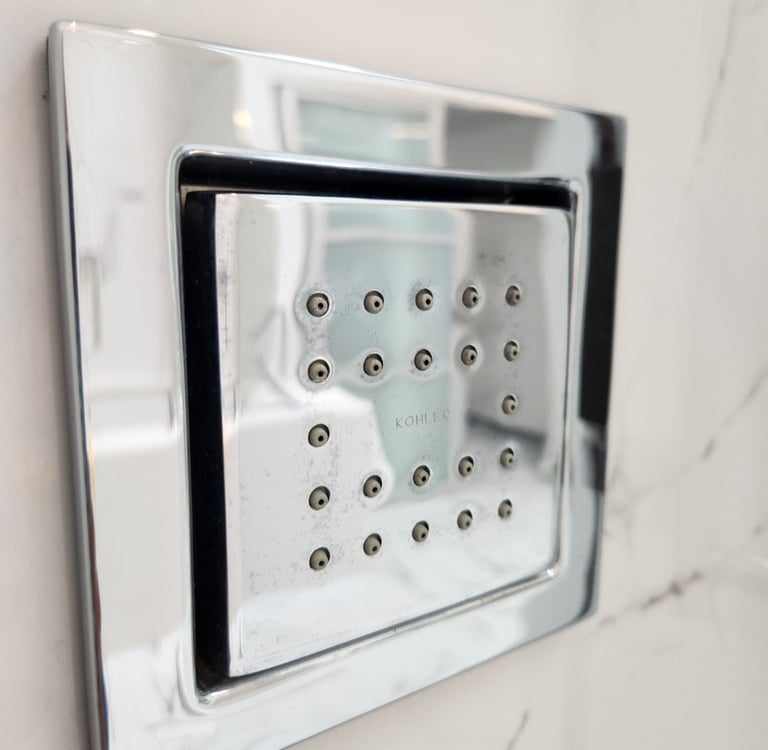
These outcomes are not random. They are the visible result of maintenance methods that do not align with the material’s composition or environmental conditions.
When multiplied across an entire property, surface damage becomes an operational cost—not just a maintenance issue.
What This Actually Costs Over Time
Premature fixture replacement
Refinishing or resurfacing
Material degradation that cannot be reversed
Labor-intensive corrections instead of maintenance
Now The Real Cost of Fixture Replacement
Replacing damaged fixtures involves more than the visible component.
Costs may include:
New fixtures (often high-end or specialty finishes)
Labor for removal and re-installation
Plumbing adjustments or repairs
Potential permitting and inspections
Coordination and service disruption
What could have been maintained becomes a significantly larger investment.
Residential Environments
Typically 2–5 affected fixtures
Replacement is contained but still costly
Impact is primarily financial and aesthetic
Commercial Environments
Multiple fixtures per floor (often 3–10 or more)
Repeated across several floors
Costs multiply across the entire property
In commercial settings, replacement is not linear—it is exponential.
Residential vs. Commercial Impact
Additional considerations include:
Operational downtime
Tenant or guest disruption
Maintenance scheduling complexity
Compliance and regulatory requirements
What begins as surface neglect can evolve into a facility-wide operational expense.
This is where material-aware care becomes essential
This approach is not theoretical.
It is part of a structured system designed to prevent surface damage before it becomes irreversible.
Through our Veppa Method, we evaluate how materials respond to maintenance, environmental exposure, and repeated interaction over time.
This allows us to move beyond reactive cleaning and into controlled, material-aligned care. Instead of reacting to visible damage, the focus shifts to understanding how surfaces interact with:
cleaning methods
environmental conditions
frequency and repetition
The goal is not just cleanliness—but stability over time.
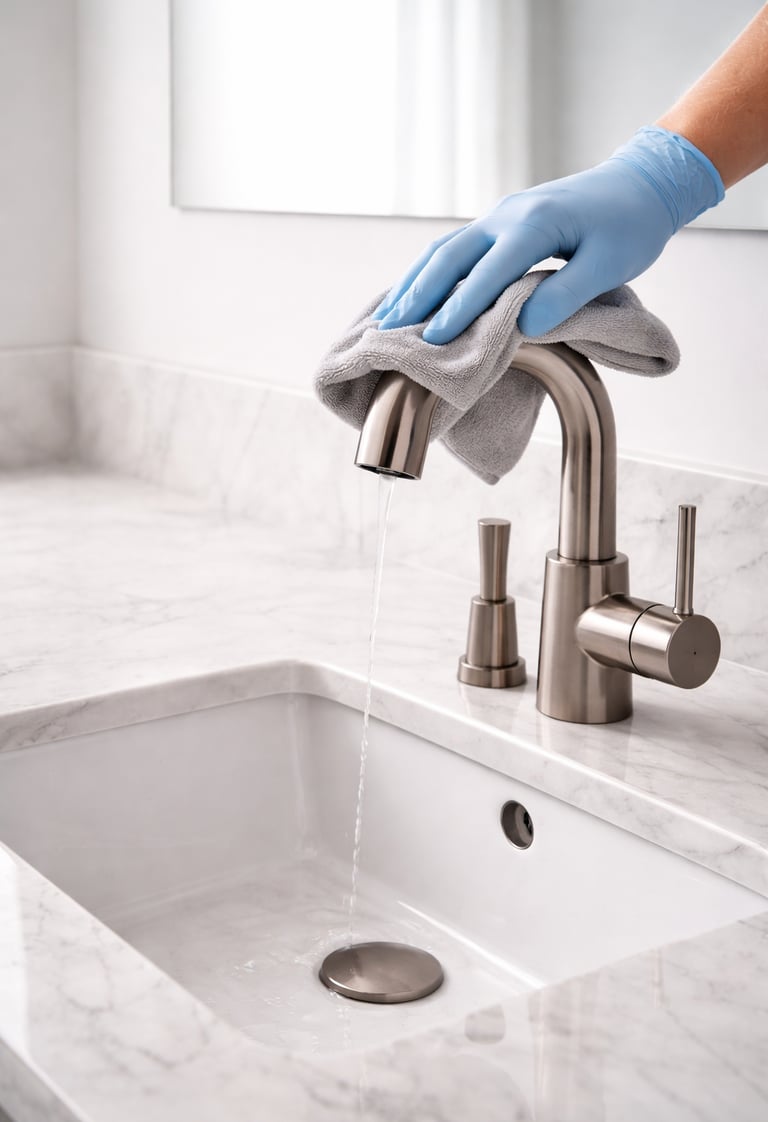
This is where system-based maintenance becomes critical
This level of care is applied differently depending on the environment
For private residences, the focus is on preserving finishes, fabrics, and surfaces that require consistent, detail-oriented care.
For commercial properties and shared environments, the approach expands into consistency, risk reduction, and long-term asset protection.
Preventable damage should never become replacement.
Understanding how and why surfaces deteriorate is the first step toward protecting them.
Our approach begins with evaluating existing conditions, identifying risk factors, and aligning maintenance methods with the materials in place.
Start with a structured surface assessment to identify risks before they become irreversible and costly.
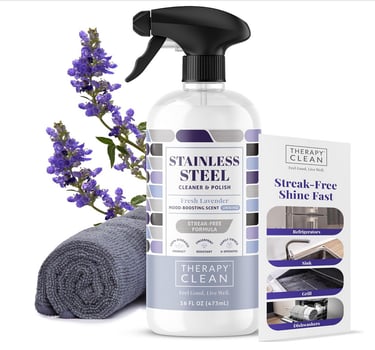
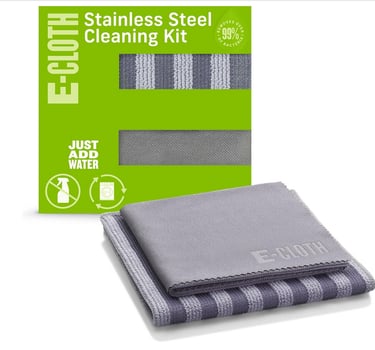
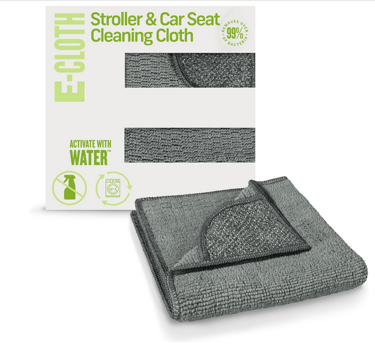
Premium Microfiber Cloth with Scrubbing Corner
Stainless Steel Cleaning Cloth
Tools alone do not determine outcomes. Improper use—even with the right product—can still lead to long-term damage.
Tools are not selected based on convenience—but on compatibility with materials, environmental conditions, and long-term impact.
Their effectiveness depends entirely on how they are used within a structured system.
Reach out for thoughtful, expert cleaning care
Technical paper- Material Compatibility & Surface Stability in Repeated Service Environments