
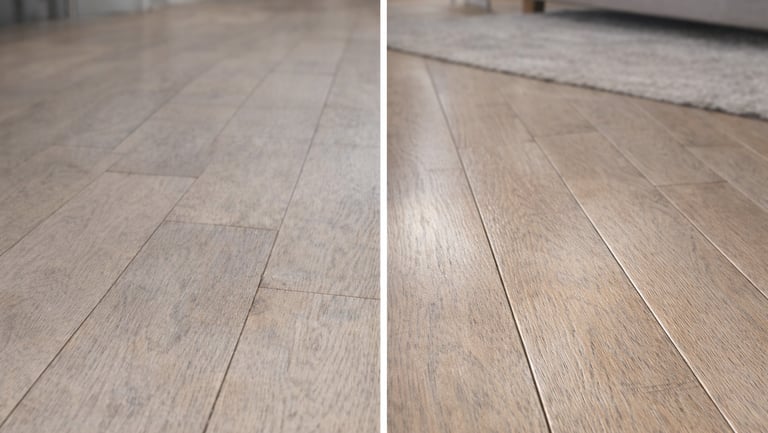
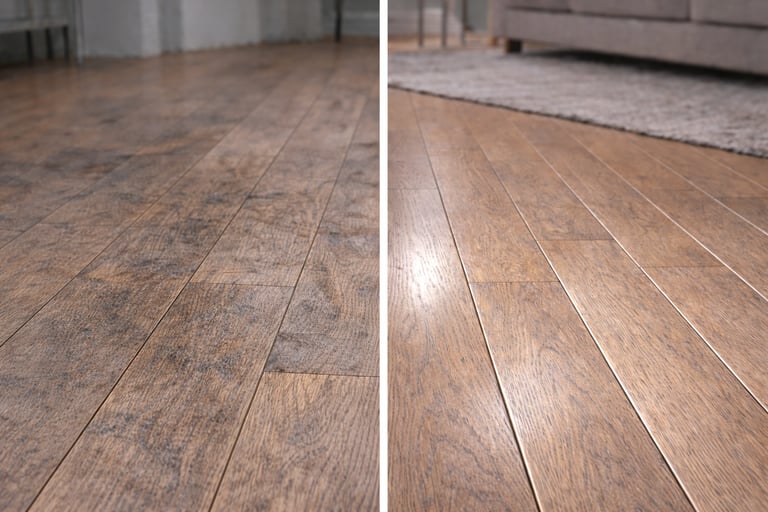
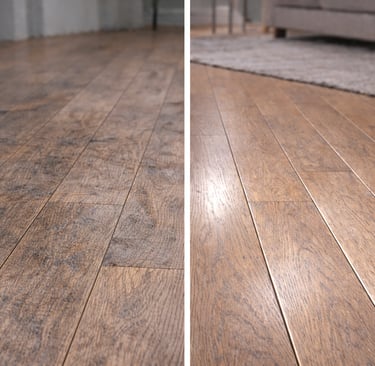
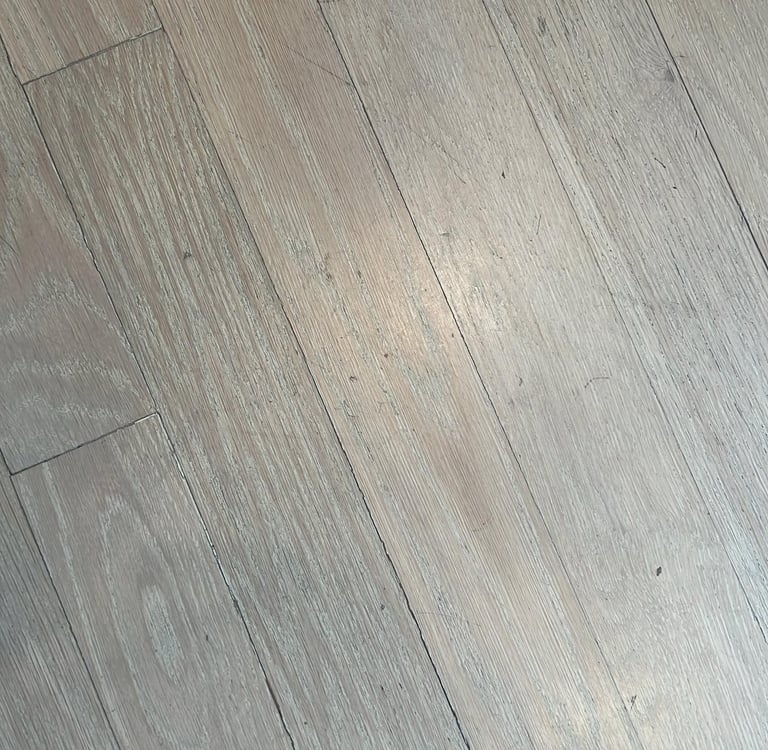
Most wood floors that appear dull, cloudy, or uneven are not permanently damaged.
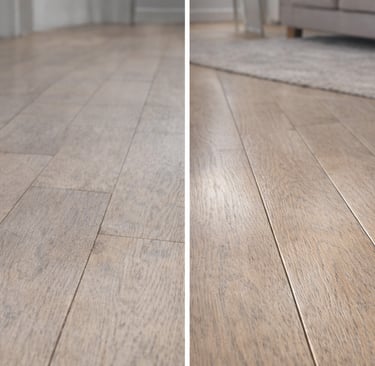
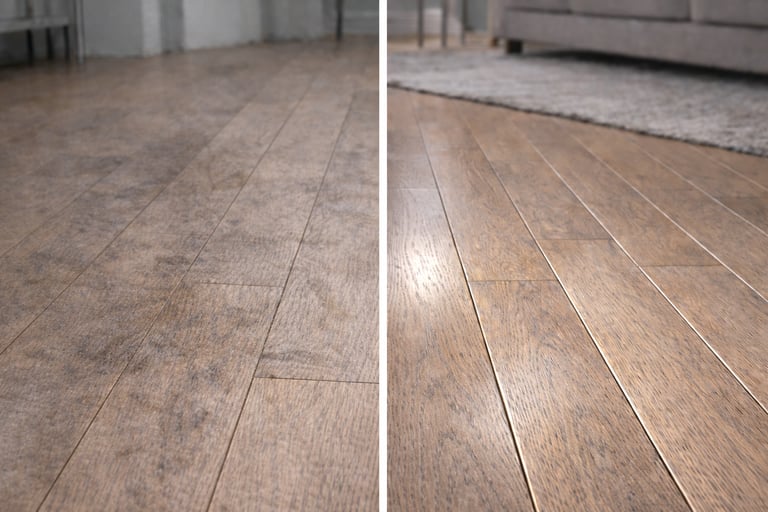
In many cases, what you’re seeing is not a failure of the wood — but a distortion at the surface.
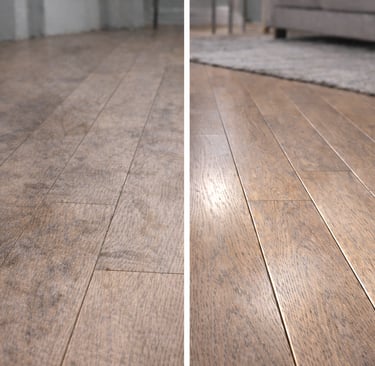
Residue buildup, fine scratches, and uneven wear in the finish layer can interfere with how light reflects across the floor. Instead of a clean, even reflection, the surface appears flat, hazy, or inconsistent.
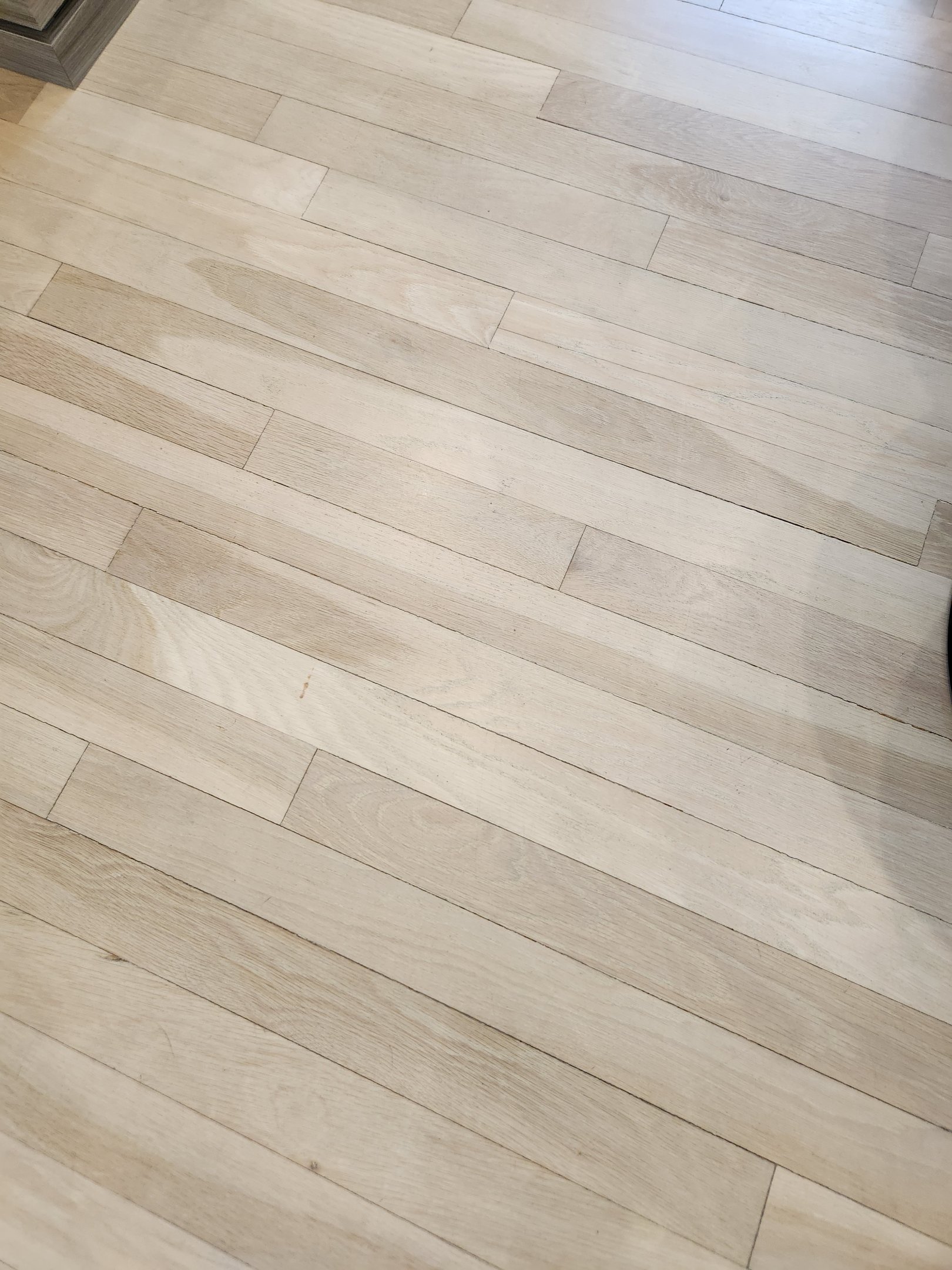
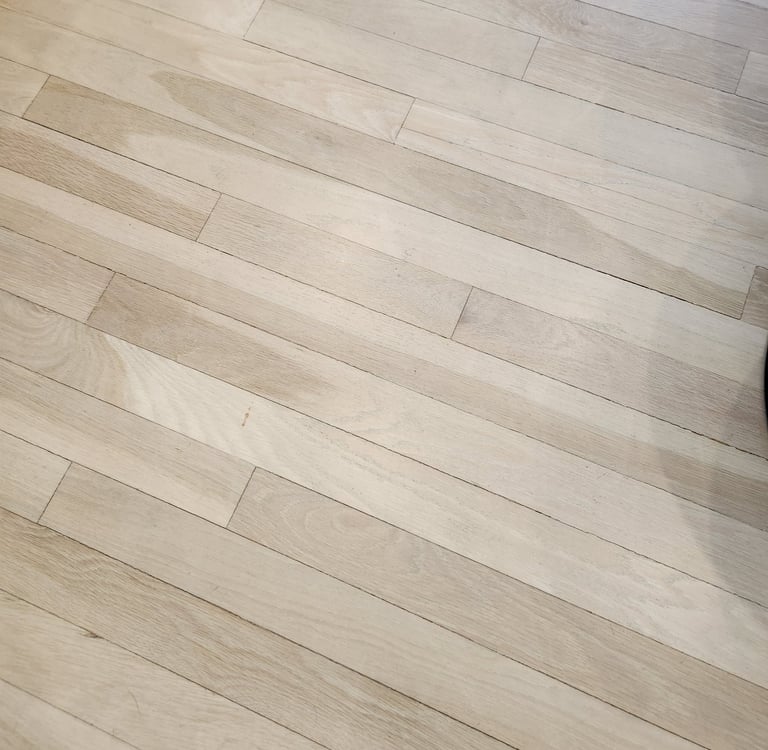
This project began with the client expressing concern over the declining appearance of her wood flooring, including loss of uniformity, surface dullness, and visible wear in high-traffic areas.
The client was unsure how to properly address these issues and was seeking a solution that could improve the condition of the floors without moving toward replacement or more invasive restoration methods.
WHAT YOU’RE ACTUALLY SEEING
When a wood floor loses clarity, it’s usually caused by one or more of the following:
Residue from cleaning products creating a thin, dull film
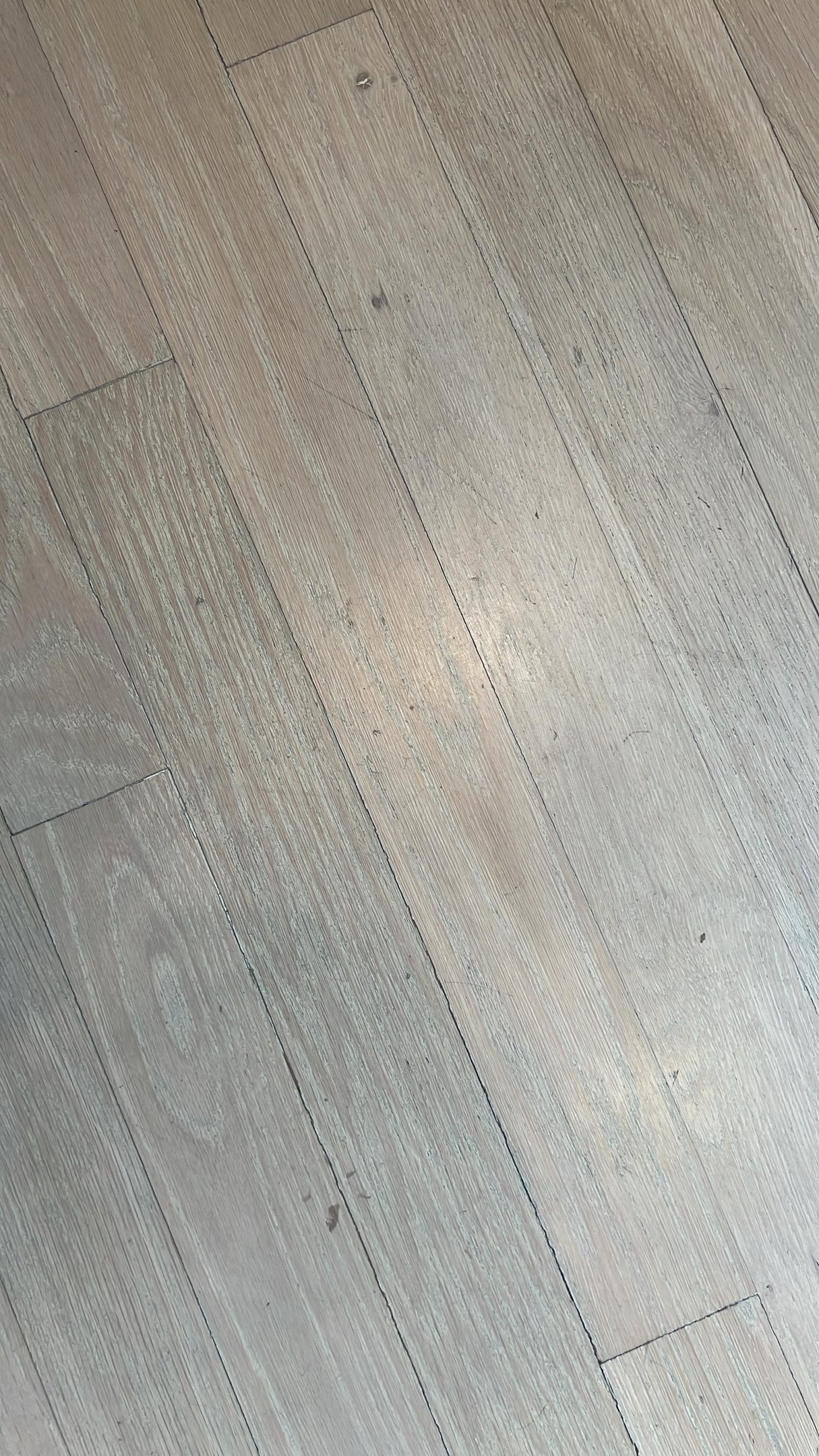
Micro-scratches from traffic and debris scattering light
Uneven wear in the finish layer causing inconsistent sheen
Moisture or environmental exposure affecting surface clarity
These are common and well-documented causes of dull floors — and importantly, they often affect only the surface layer, not the wood itself
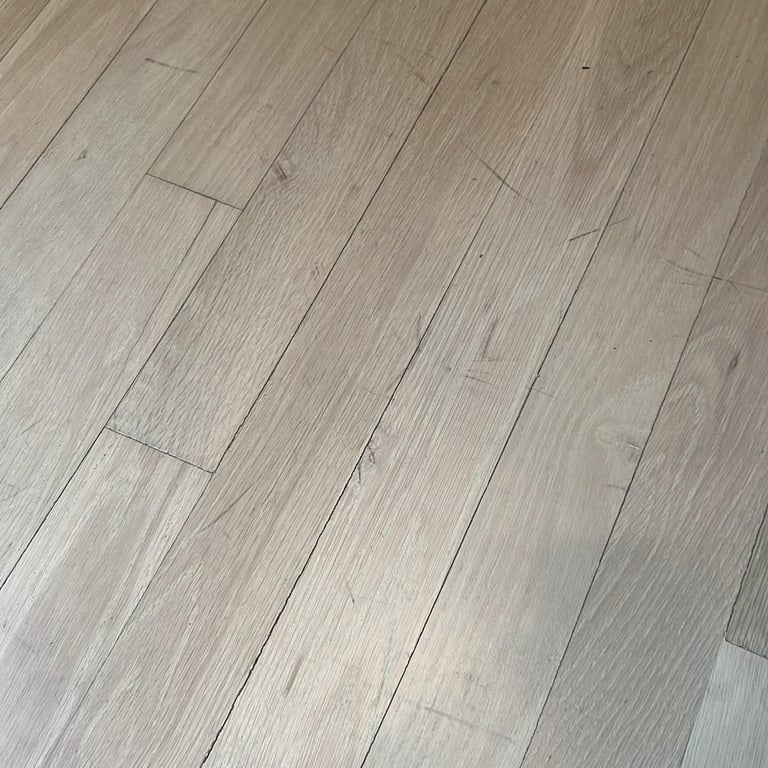
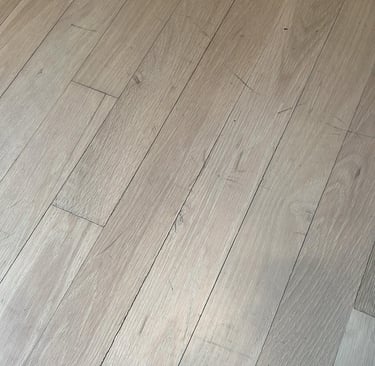
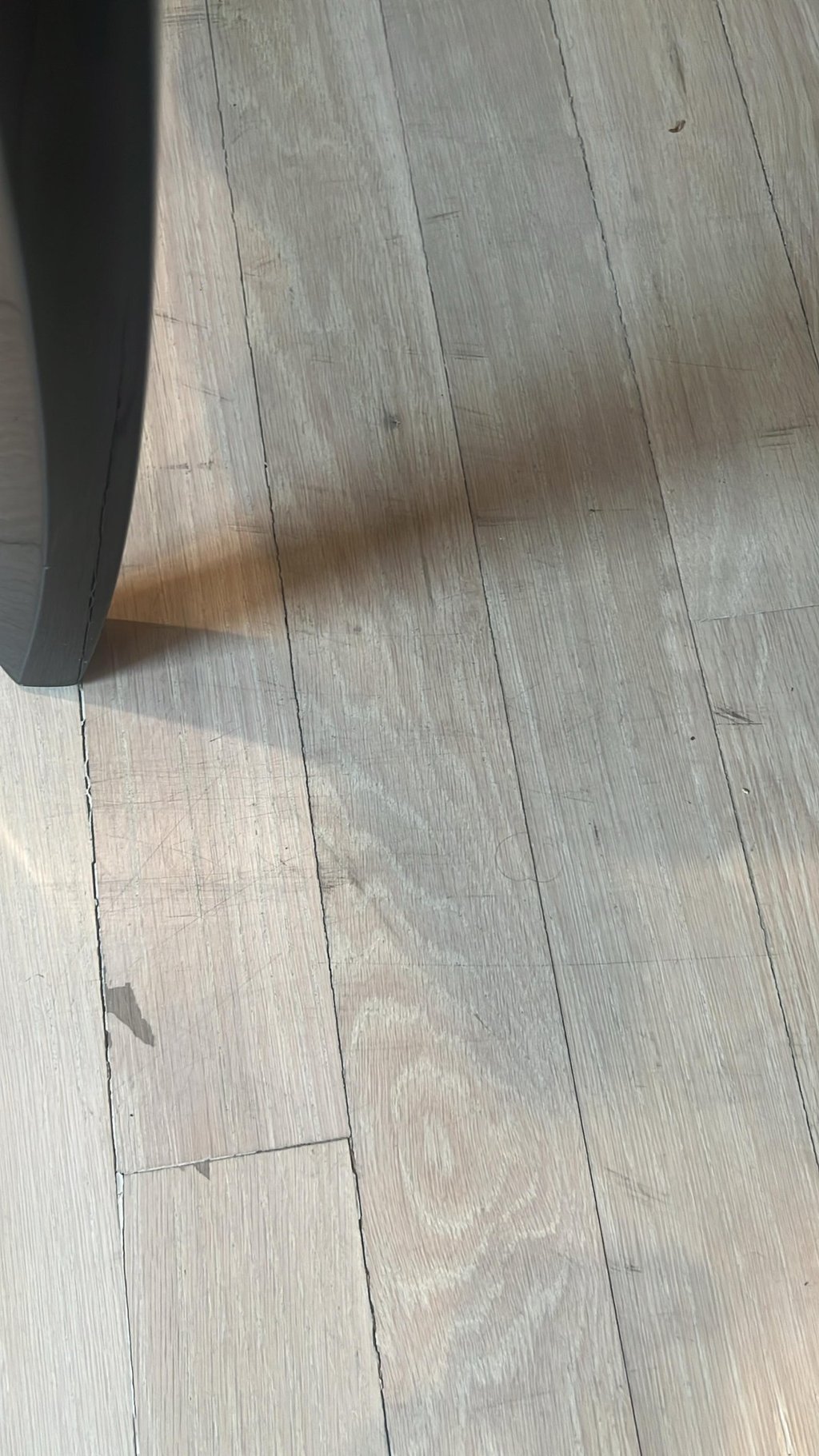
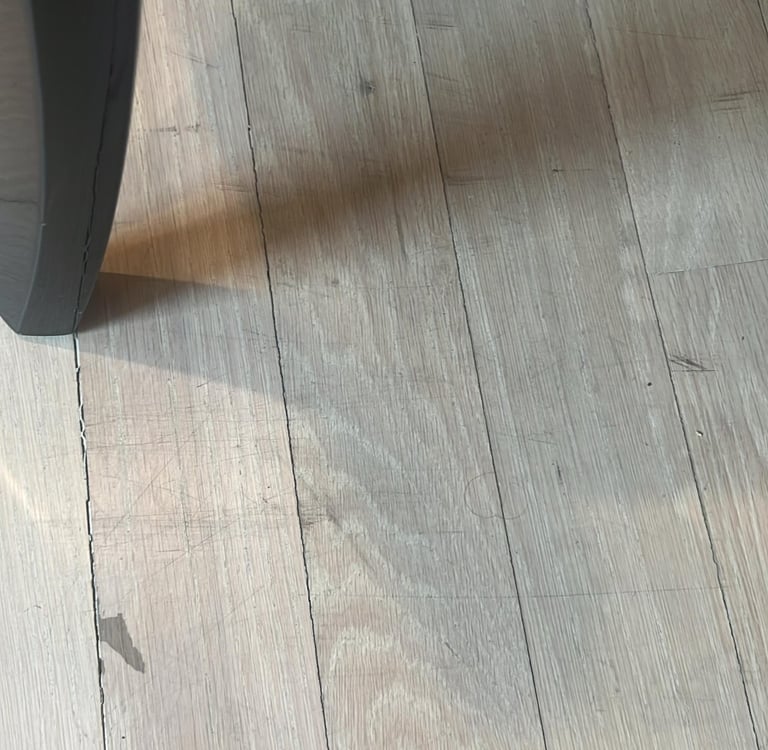
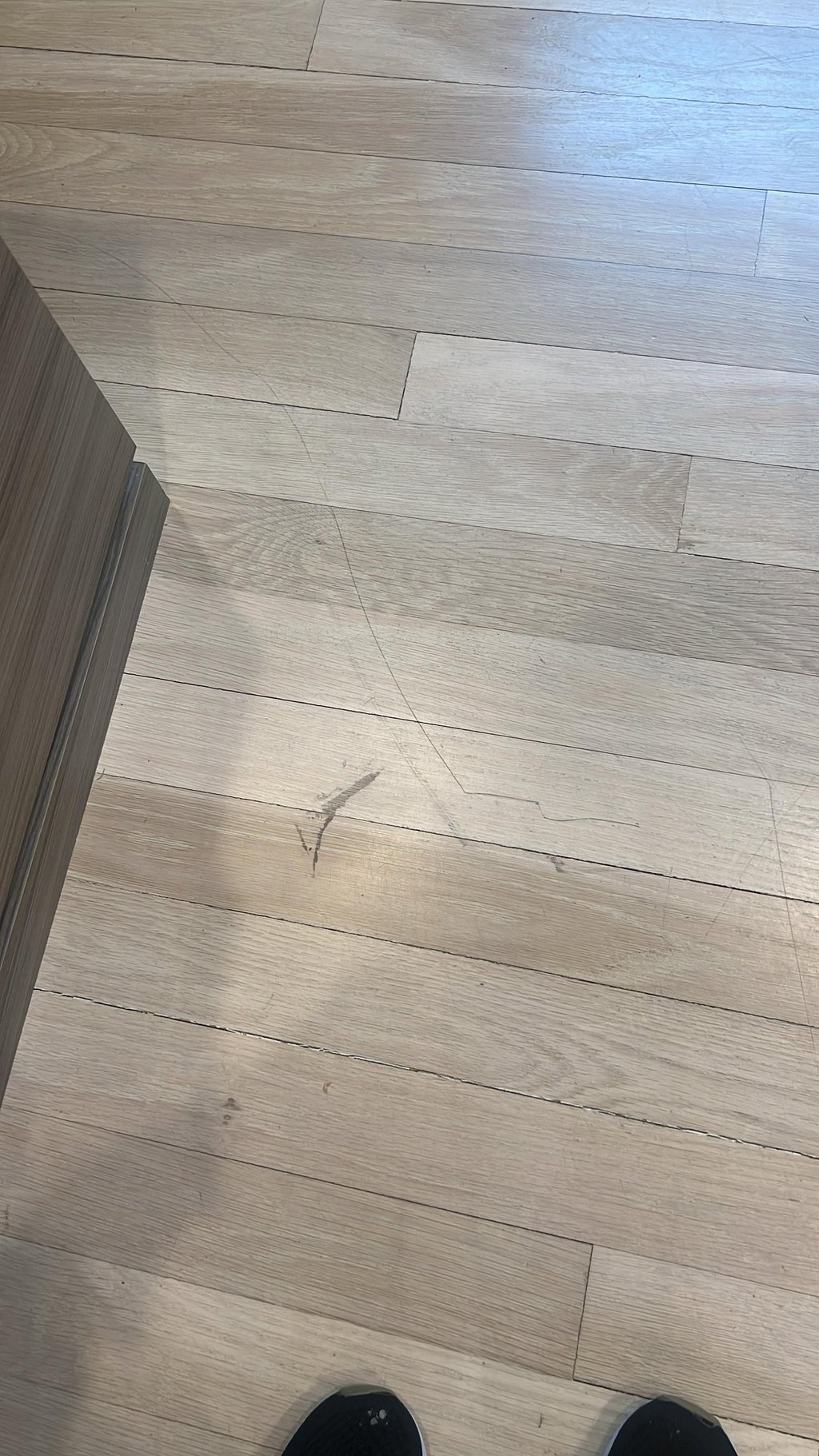
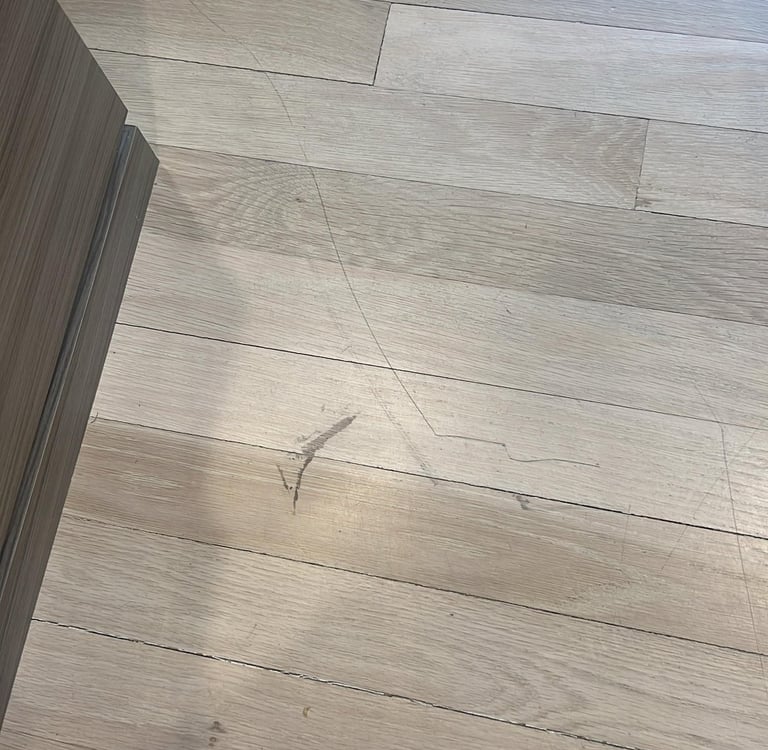
Why Wood Floors Look Dull and Uneven — And How Clarity Can Be Restored Without Refinishing
Surface dullness and reduced light reflection
Technical Assessment
From a wood floor perspective, this condition reflects a combination of material exposure, wear, and maintenance factors.
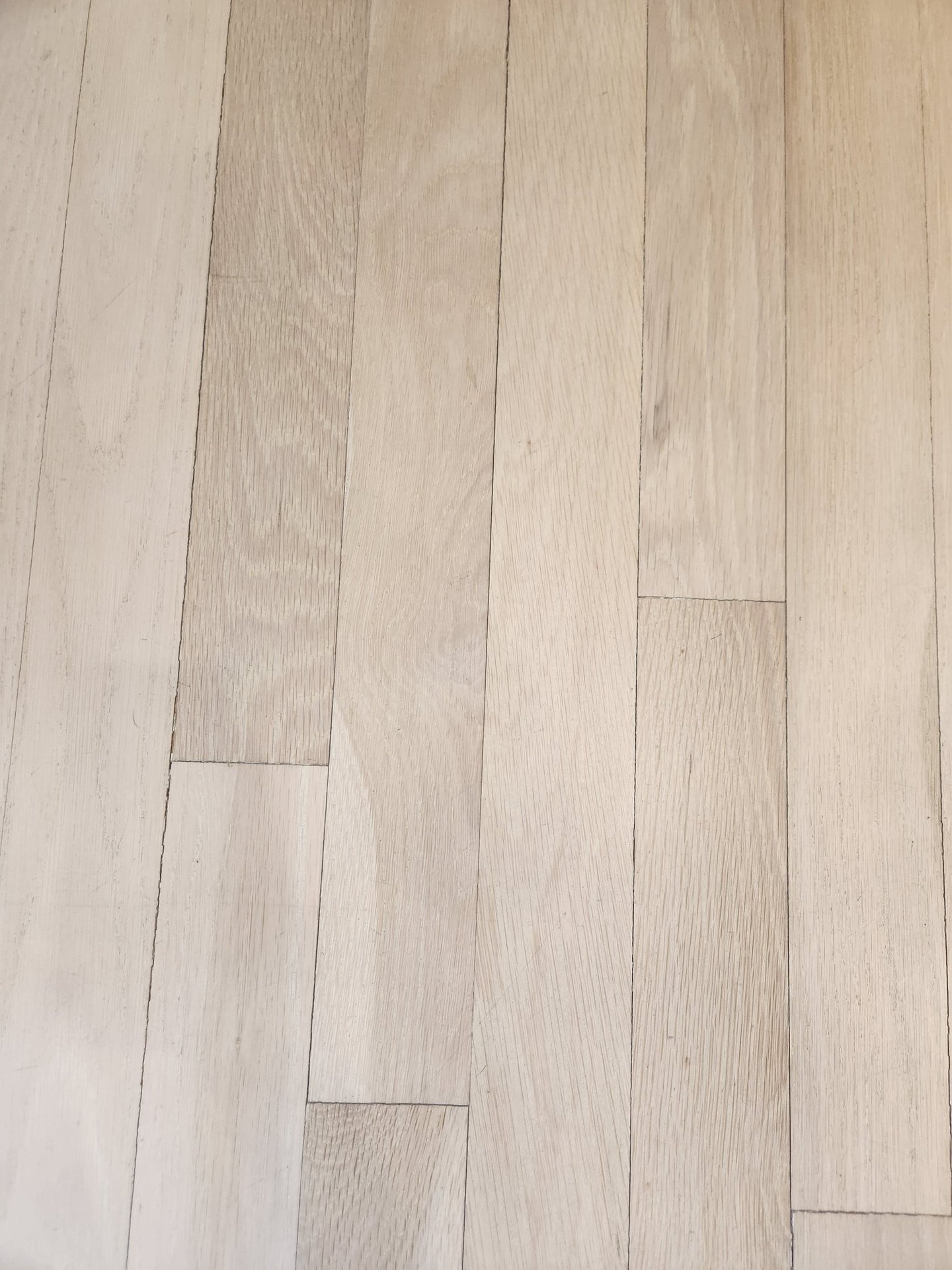
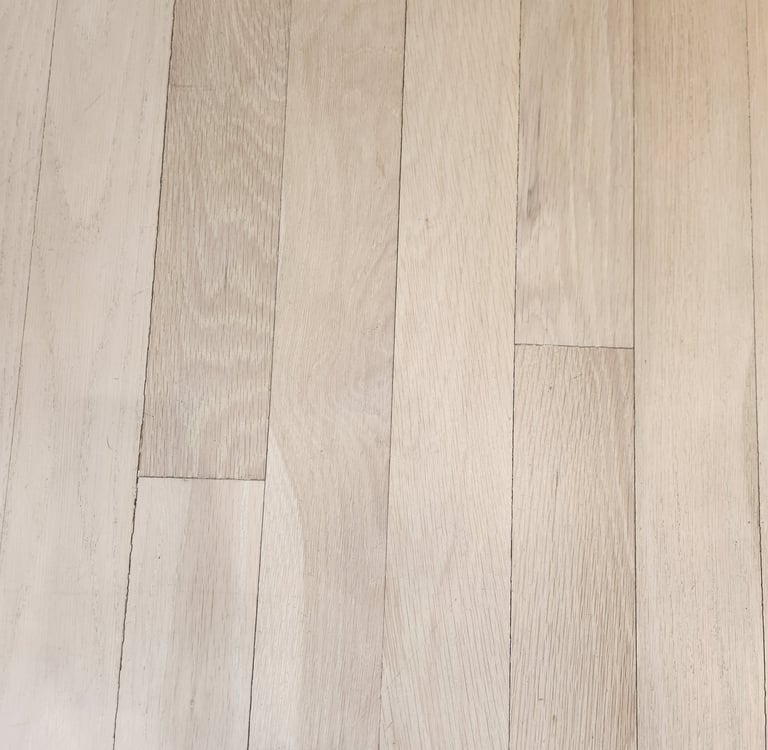
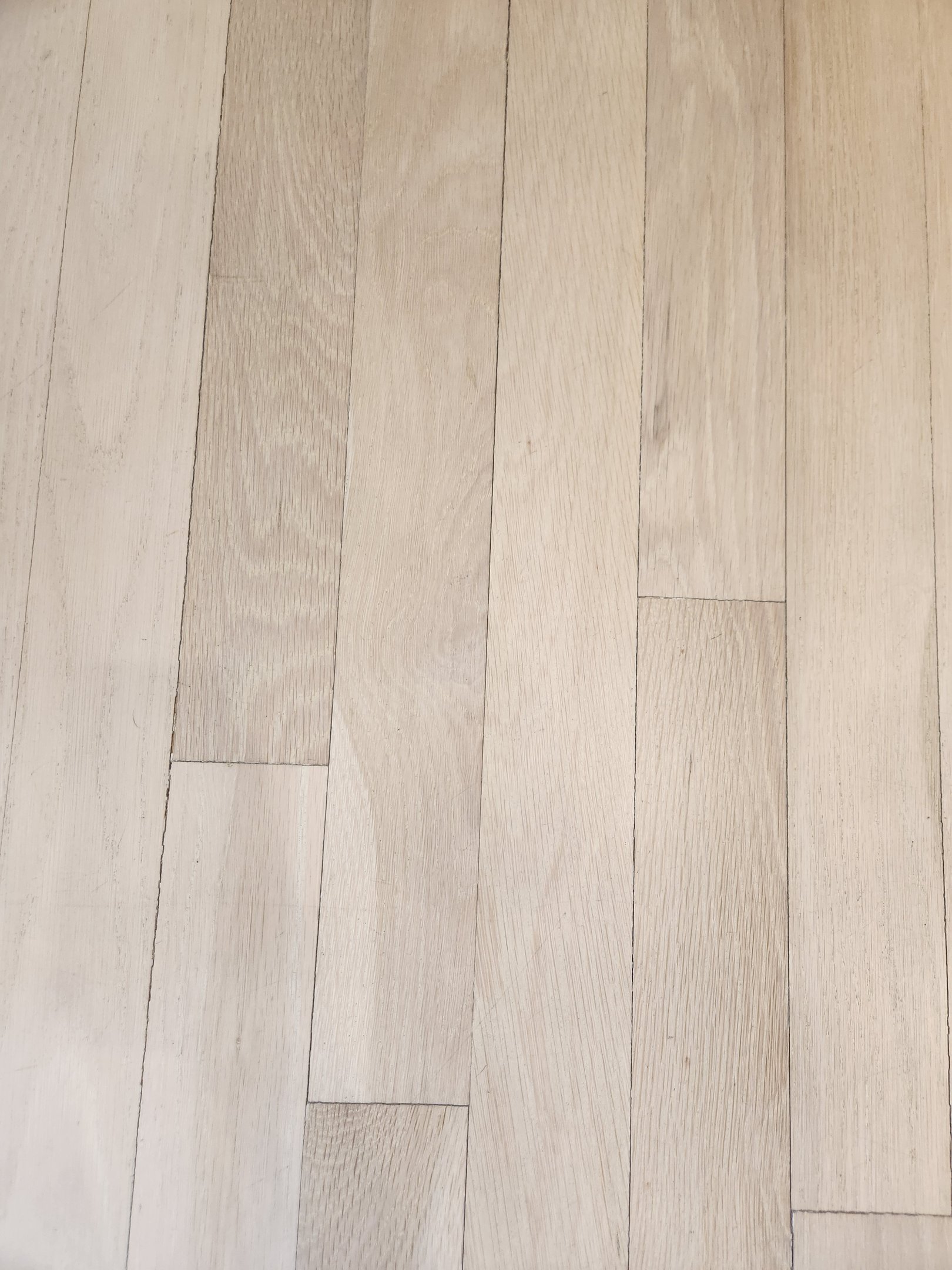
The surface showed signs of minimal or no effective protective coating
The wood grain remained open and absorbent
Prior use of general-purpose products such as Lysol and Mr. Clean likely contributed to residue buildup and uneven appearance
Daily traffic resulted in mechanical wear and pattern formation
Without a protective system, the wood absorbs contaminants directly, which affects both appearance and cleanability over time.
WHY REFINISHING IS OFTEN OVERUSED
Refinishing is a valid process.
But it also:
removes material
alters the original surface
involves higher cost and disruption
In many situations, refinishing is recommended before the surface is properly evaluated.
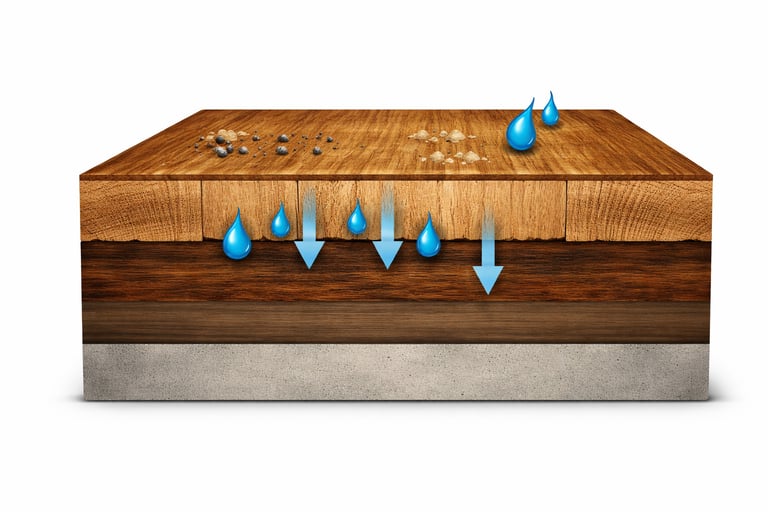
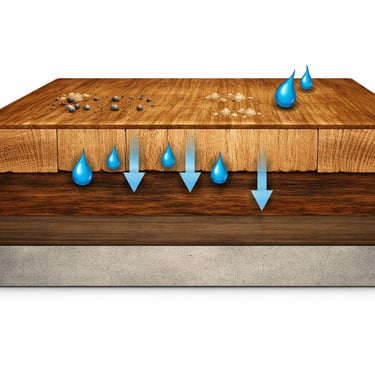
Structure of wood floor showing surface exposure and absorption into grain
Absorbed Contaminants
Long-Term Considerations
To maintain and continue improving results:
Use wood-specific cleaning systems
Avoid general-purpose cleaners
Maintain consistent care routines
Monitor wear patterns over time
Reach out for thoughtful, expert cleaning care
Technical paper- Material Compatibility & Surface Stability in Repeated Service Environments